
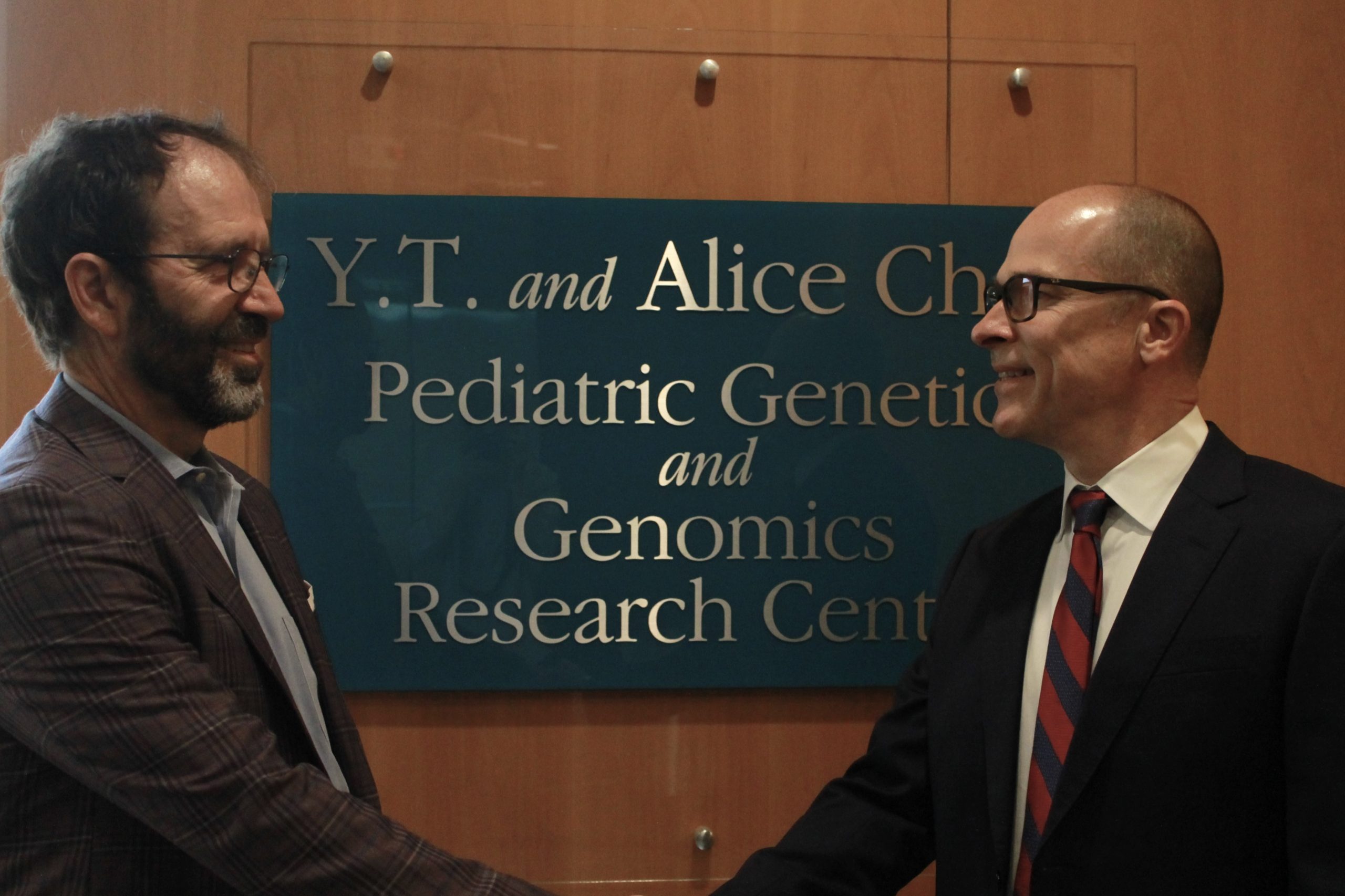
RALEIGH, NC, April 8, 2025 /PRNewswire/ — GeneVentiv Therapeutics, a gene therapy company, today announced it has signed a global licensing agreement with Duke University for the first universal gene editing therapy for both infantile-onset and late-onset Pompe disease, which affect 120,000 patients in the developed world. The therapy has been designated GENV-002.
Pompe disease results from a deficiency of an enzyme called acid-alpha-glucosidase (GAA), leading to massive lysosomal glycogen buildup in striated muscle, resulting in respiratory failure, limited mobility, persistent muscle weakness, and heart complications, severely restricting daily activities.
Current treatment places a heavy burden on families. Enzyme Replacement Therapy (ERT) requires biweekly infusions at specialized centers, lasting 4-6 hours and costing up to $11.7 million over a lifetime. While ERT has extended survival in infantile-onset cases, no curative therapy exists.
GENV-002 was invented by Dwight Koeberl, M.D., Ph.D., professor in the Department of Pediatrics and a medical genetics specialist at Duke University, along with leading experts in genetic disease and specifically Pompe disease. Dr. Koeberl previously invented a gene therapy limited to treating late-onset Pompe disease that was licensed to AskBio.
For nearly two decades, Dr. Koeberl has been working toward a treatment that could overcome the inability of adeno-associated virus (AAV) gene therapies to treat all infants with Pompe disease. GENV-002 is a liver depot strategy utilizing AAV for delivery of a healthy donor gene and a CRISPR Cas9 editor for gene integration.
The culmination of Dr. Koeberl’s work is GENV-002. Combined with newborn screening for both infantile- and late-onset Pompe disease, GENV-002 can be administered to all patients as infants, a decade or more in advance of non-genome editing AAV competitors. The technology was licensed through the Duke University Office for Translation & Commercialization.
“GeneVentiv has made significant strides in executing our business model of identification of transformative gene therapies, in-licensing and development,” said Damon Race, CEO of GeneVentiv Therapeutics. “The therapies we have licensed share a common theme as universal therapies that are the first to address patients left behind by the shortcomings of other approaches.
With our latest license we can now address greater than 270,000 developed-world patients with a pricing precedent of $3 million for a single infusion gene therapy.”
“Our lead program GENV-HEM is a universal gene therapy for all hemophilias and the first to durably address hemophilia A with or without inhibitors, which Factor VIII gene therapies could not achieve,” said Paris Margaritis, CSO of GeneVentiv Therapeutics. “Similarly, GENV-002 surpasses existing AAV gene therapies with the ability to universally treat infantile- and late-onset Pompe disease in infancy via gene editing.”
About GeneVentiv Therapeutics
GeneVentiv Therapeutics is a preclinical gene therapy company focused on identifying, in-licensing, and developing transformative genetic medicines for diseases with significant unmet needs. GeneVentiv is advancing two first-in-class programs. GENV-HEM is a liver-directed gene therapy designed to provide activated Factor V (FVa) for patients with hemophilia A, with or without FVIII inhibitors. GENV-002 is an in vivo gene-editing therapy for both infantile-onset (IOPD) and late-onset (LOPD) Pompe disease, designed to stably integrate a functional GAA transgene and establish the liver as a durable source of GAA enzyme.
Together, these programs are designed to address serious diseases where significant unmet needs remain.
Explore, learn more and grow with us.
← Back to Media